Who has to use e‑Factura?
Businesses established in Romania send their invoices through RO e‑Factura: B2G since July 2022, B2B since January 2024 and B2C since January 2025. The main exceptions are fiscal receipts that qualify as simplified invoices, intra-EU supplies to buyers with another EU VAT code, and suppliers identified only by personal numeric code (CNP), who may opt in. We confirm which of your documents fall in scope at the start, including for a Romanian entity that is part of a wider group.
What do you need from us to connect to SPV?
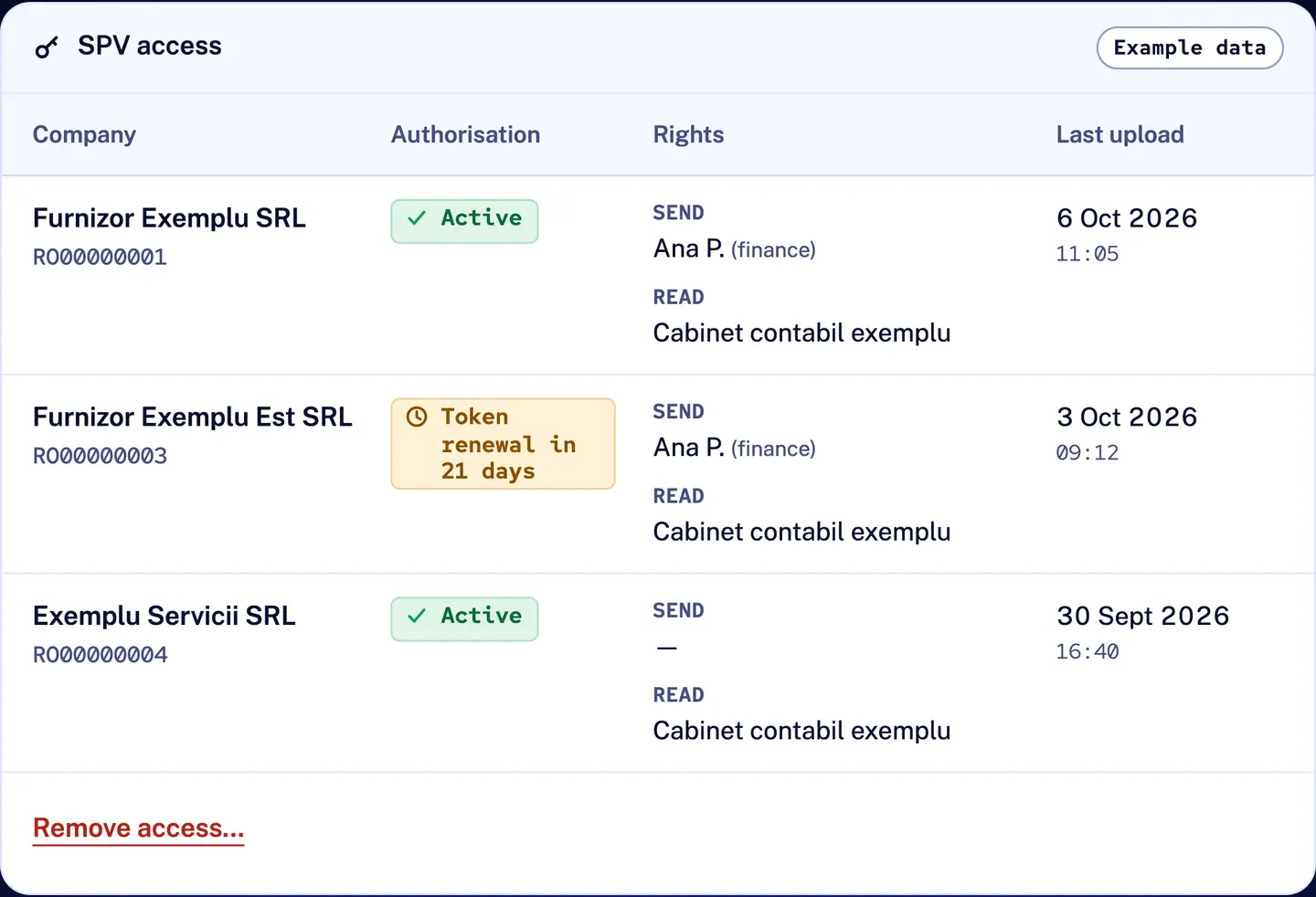
A qualified digital certificate for an authorised person of each company, enrolment in SPV, and a decision on who may send and who may only read. An accountant enrolled in SPV for several client companies can authorise each of them with their own qualified certificate. We go through ANAF’s test environment before go-live. You stay the owner.
What happens when ANAF rejects an invoice?
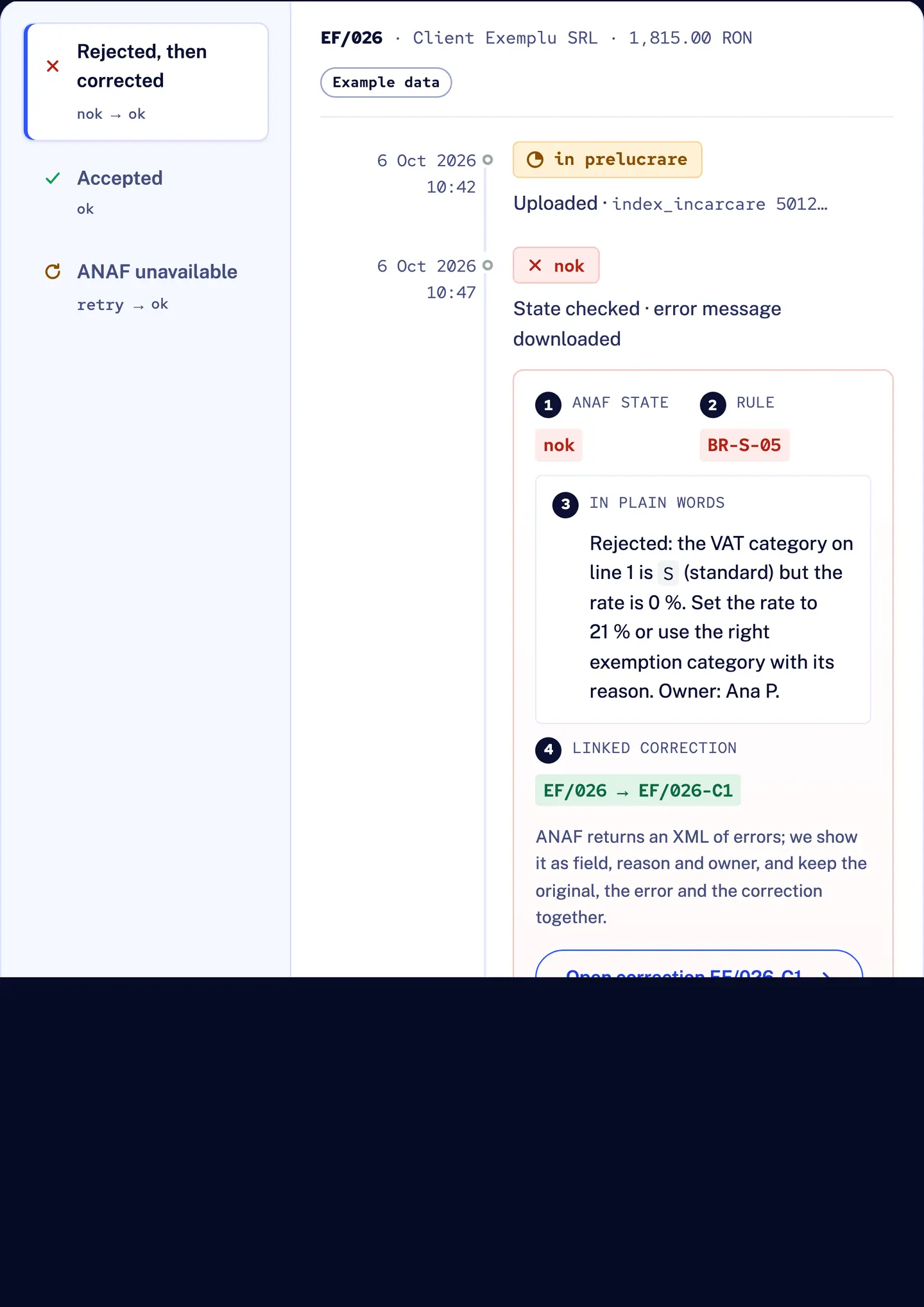
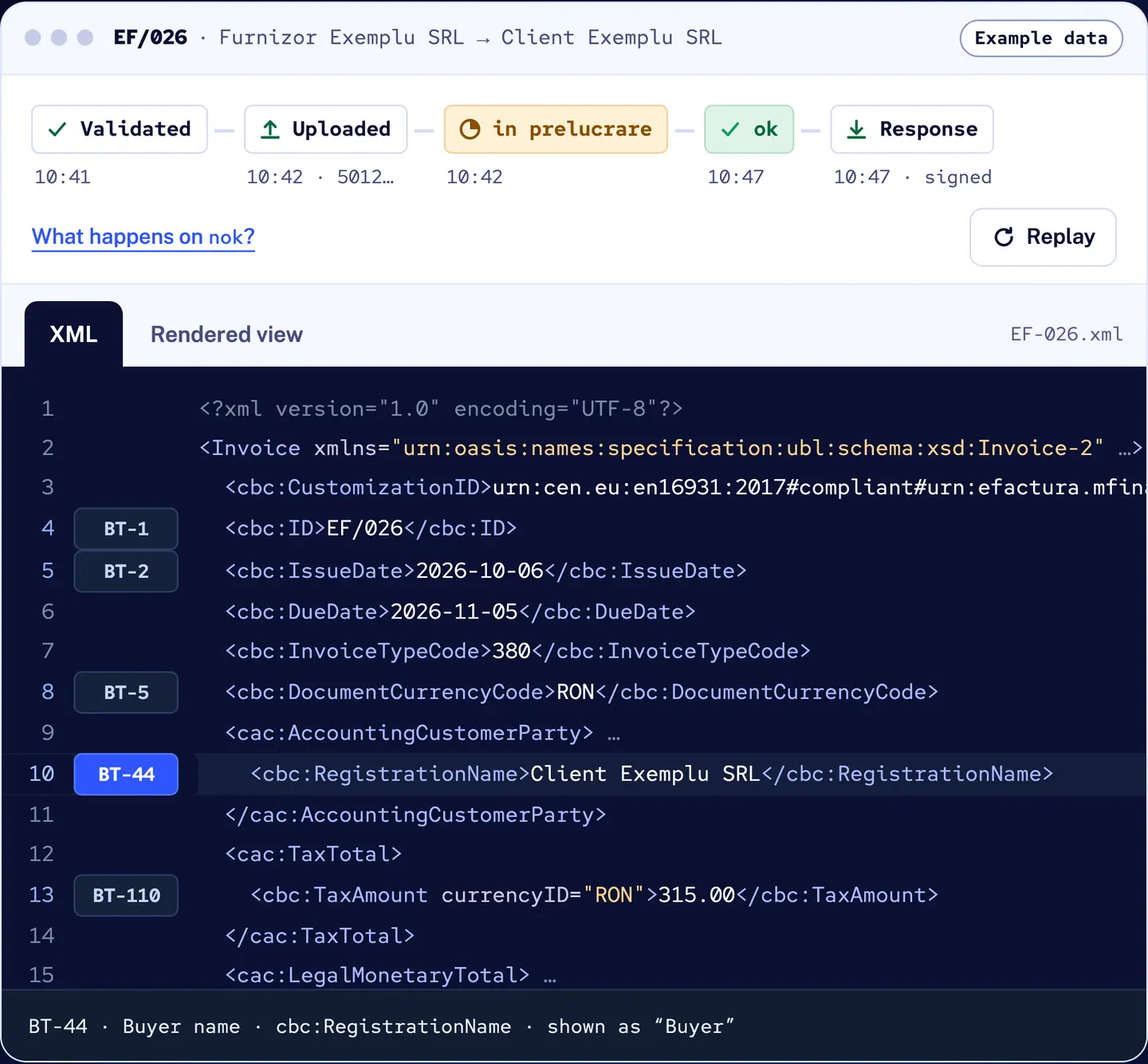
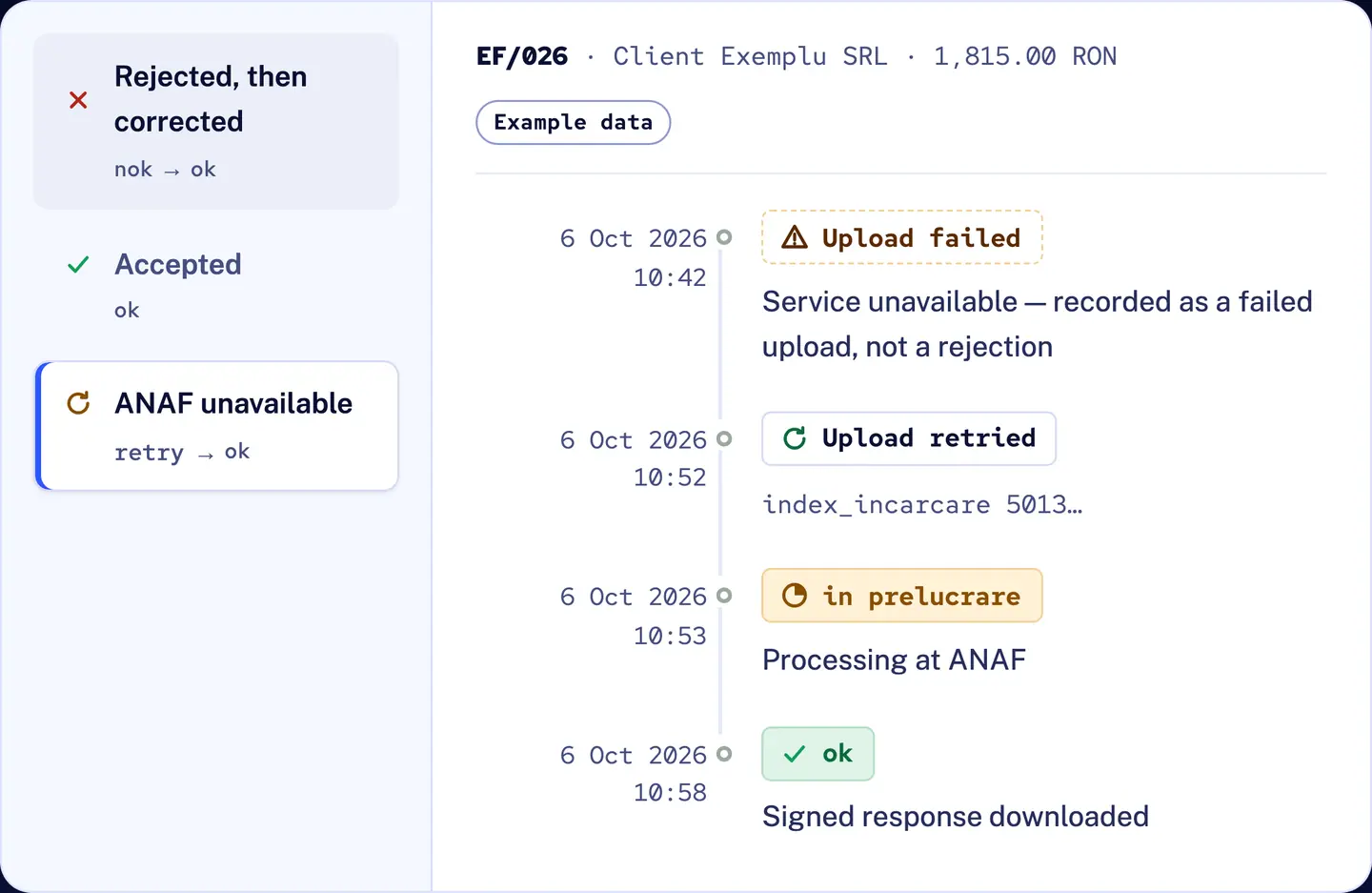
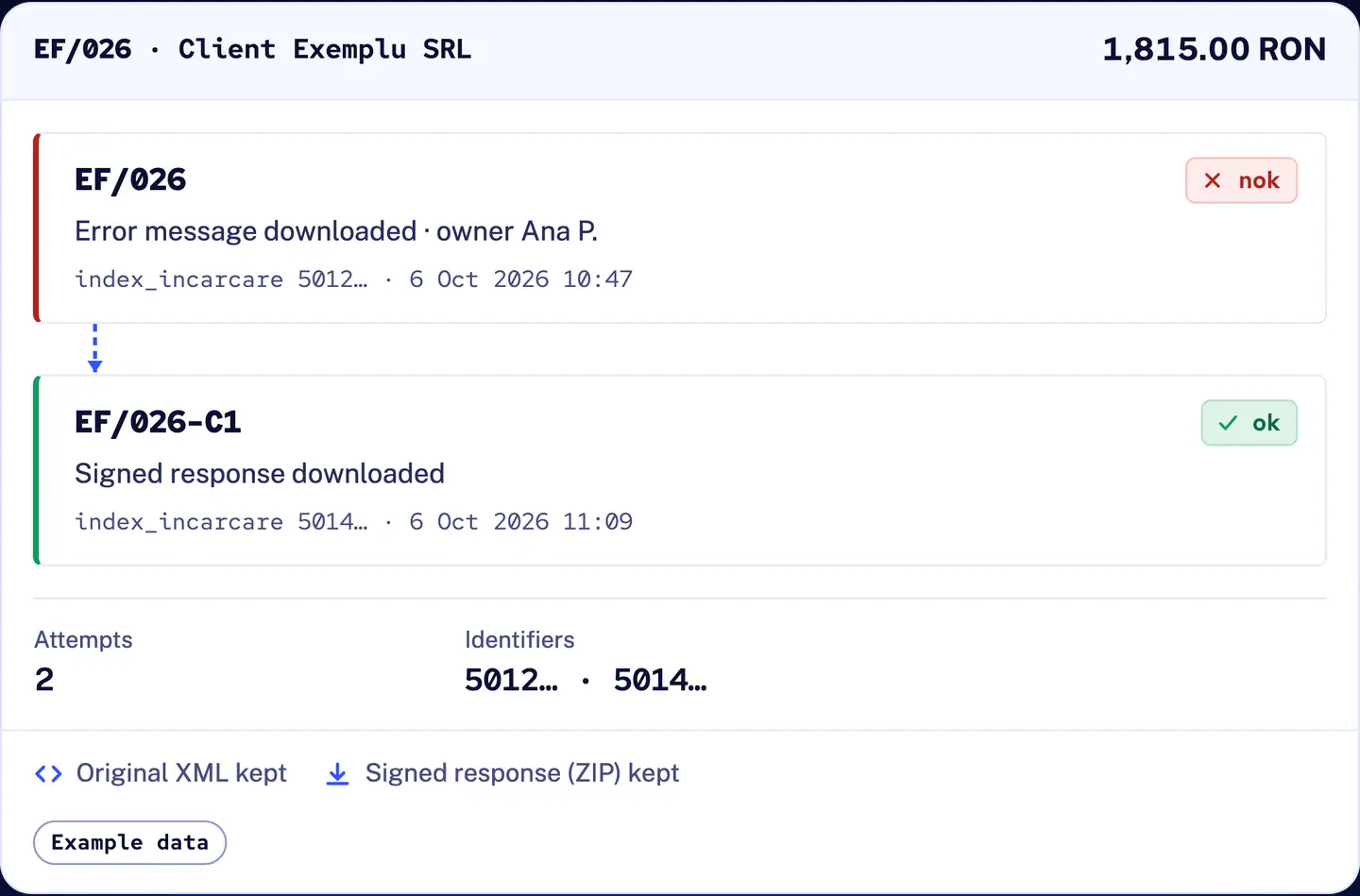
The state becomes nok. The error message is downloaded, the field and reason are shown in plain words with an owner, and the correction you send stays linked to the original.
And when ANAF’s system is unavailable?
The attempt is recorded as a failed upload, not a rejection, and retried automatically on the schedule you approve. Before any retry, the status is checked so the same invoice is not sent twice. Every attempt stays visible.
Do we have to use R&D COPILOT ERP?
No. R&D COPILOT ERP connects directly; other billing or ERP systems connect through R&D COPILOT Integrations, and we scope that connection with you.
Can our external accountant work in it?
Yes. Access is given per person and per company, with send or read-only rights, and removed in one place, including background operations that use it.
Where is the data kept, and who holds the credentials?
The service runs in EU data centres. The qualified certificate never leaves its holder: SPV access works through ANAF’s OAuth tokens, issued after that person signs in. Where tokens and downloaded responses are kept, and for how long, is set in your implementation agreement.
How much does it cost?
A one-off implementation fee and a monthly licence covering hosting, updates and support. Both depend on the number of companies and source systems, so we quote after reviewing your example invoices.
Is there a deadline for uploading invoices?
Yes. Since 1 January 2026 an invoice must reach RO e‑Factura within 5 working days of its issue date, and no later than 5 working days after the legal invoicing deadline. Late uploads are fined from RON 1,000 to RON 10,000 depending on company size. The status view shows every invoice that is not uploaded yet.
How are credit notes and storno invoices handled?
Each one is sent the way your ERP issues it: as a credit note (381), or as an invoice with negative quantities, since the unit price may not be negative. It goes through the same checks and stays linked to the invoice it corrects.
What about invoices in foreign currency or with reverse charge?
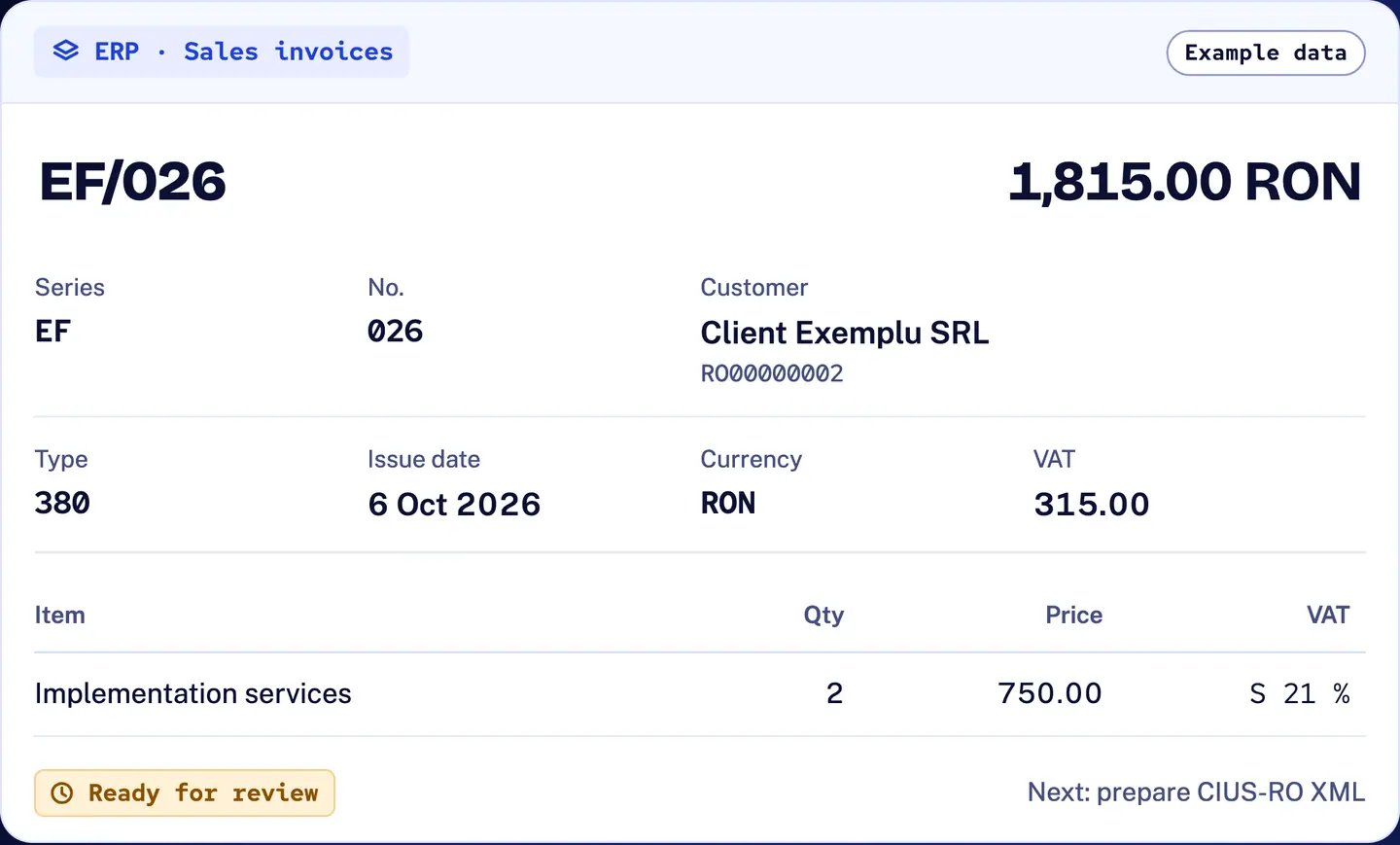
Currency and VAT category (BT-5, BT-6, BT-151) are part of the mapping and the checks. A foreign-currency invoice still carries its VAT total in RON, as CIUS‑RO requires, and reverse-charge lines use category AE. We test your real cases on the example invoices before go-live.
We already upload in SPV manually or use another provider. Can we switch?
Yes. We agree a switch-over date per company so no invoice is sent twice. Invoices sent before that date stay where they are unless bringing them in is part of the scope.